

What is a Copay?
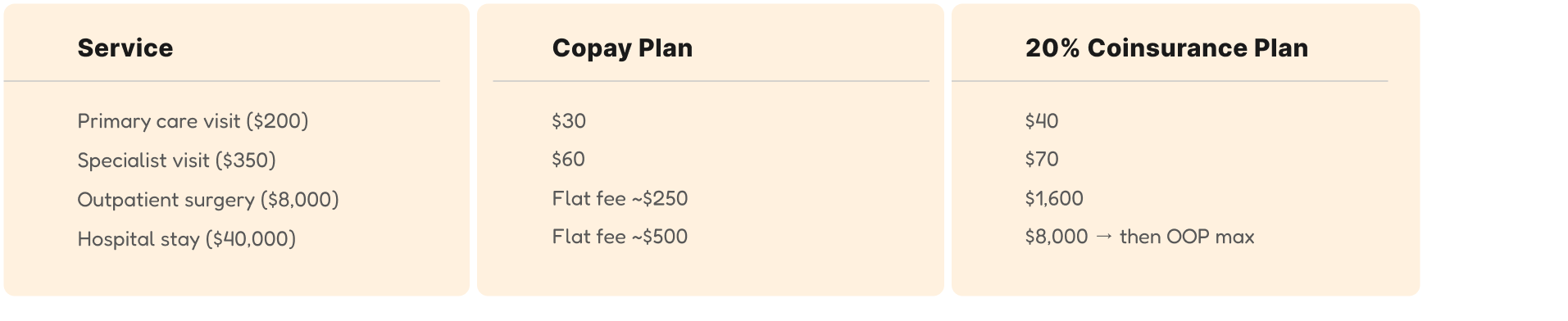
A copay is a fixed dollar amount you pay for a specific service — for example, $30 for a primary care visit or $60 for a specialist. The amount is fixed regardless of what the visit costs your insurer. Copays are predictable, which makes monthly healthcare budgeting simple and straightforward.
What is Coinsurance?
Coinsurance is a percentage of the total bill you pay after your deductible is met. A 20% coinsurance on an $8,000 outpatient surgery means you owe $1,600. On a $40,000 hospital stay, that same 20% becomes $8,000 — before your out-of-pocket maximum intervenes. Coinsurance scales with the cost of care, making it far less predictable than a flat copay.
What to Look For on Your Plan
Many plans use both mechanisms: flat copays for routine visits and coinsurance for major procedures. Always read your Summary of Benefits and Coverage before enrolling so you know exactly which cost-sharing model applies — and for which services.
The Broker Advantage at a Glance

Not sure how to read your Summary of Benefits?
Ready to see the full market in one place?
Key Takeaways
- Copays are flat fees — predictable and easy to budget for.
- Coinsurance is a percentage — your exposure grows with the cost of care.
- Know your out-of-pocket maximum: it is the hard cap on your coinsurance exposure.